

-
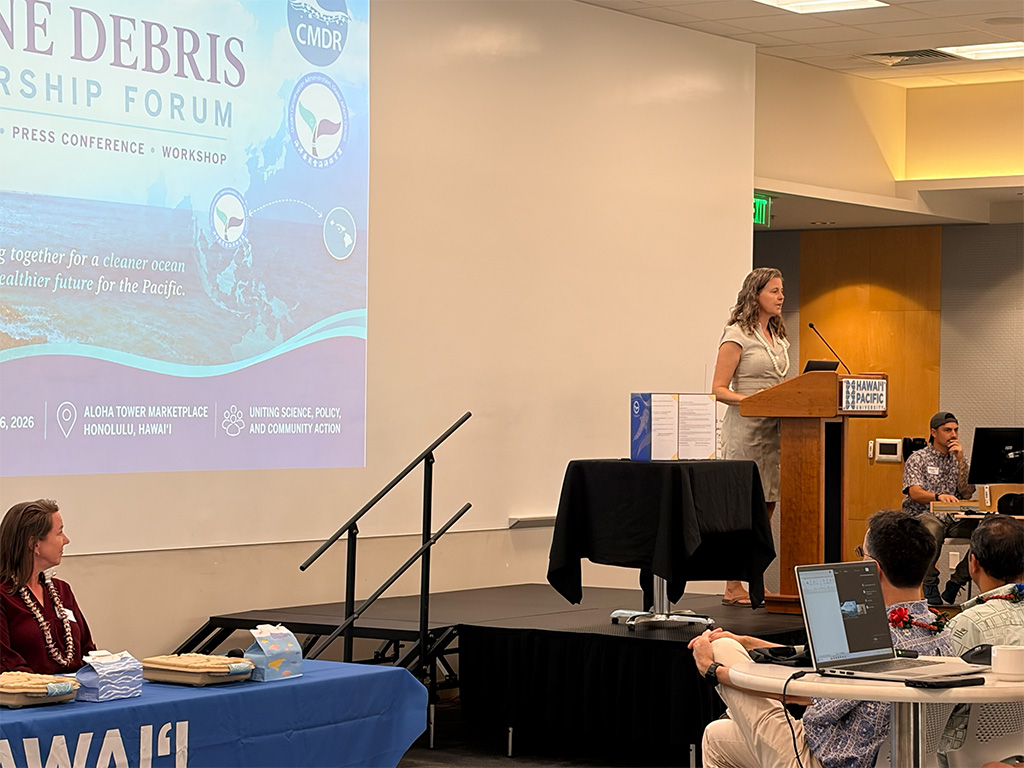
Jennifer Lynch spoke at the International Workshop on Derelict Fishing Gear to community members, researchers, dignitaries, and practitioners from across the Pacific.
-
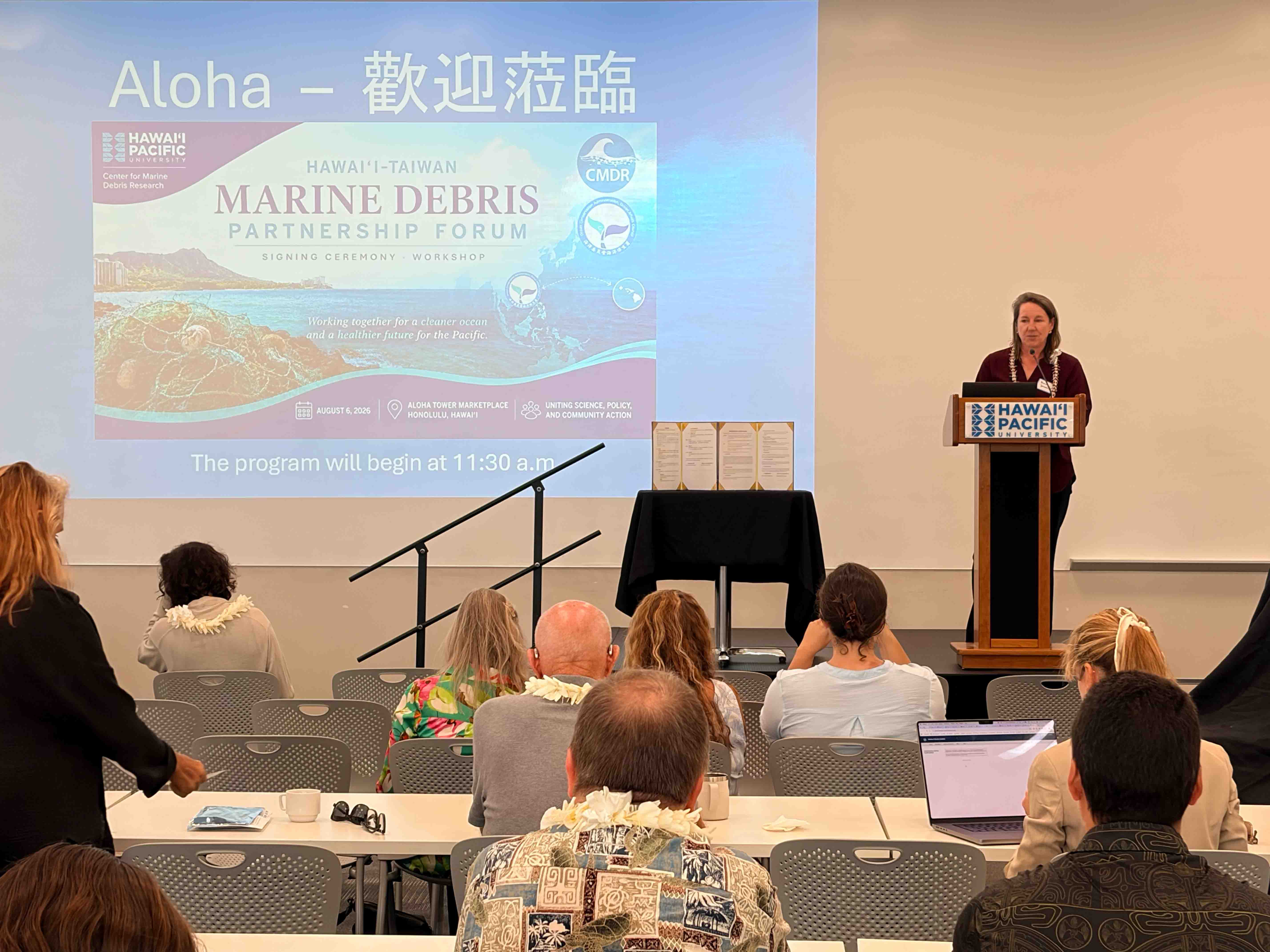
Dean Brenda Jensen spoke about the HPU Center for Marine Debris Research and the dedication the Center provides in developing and applying the best available science to understand the challenge of marine plastic pollution.
-
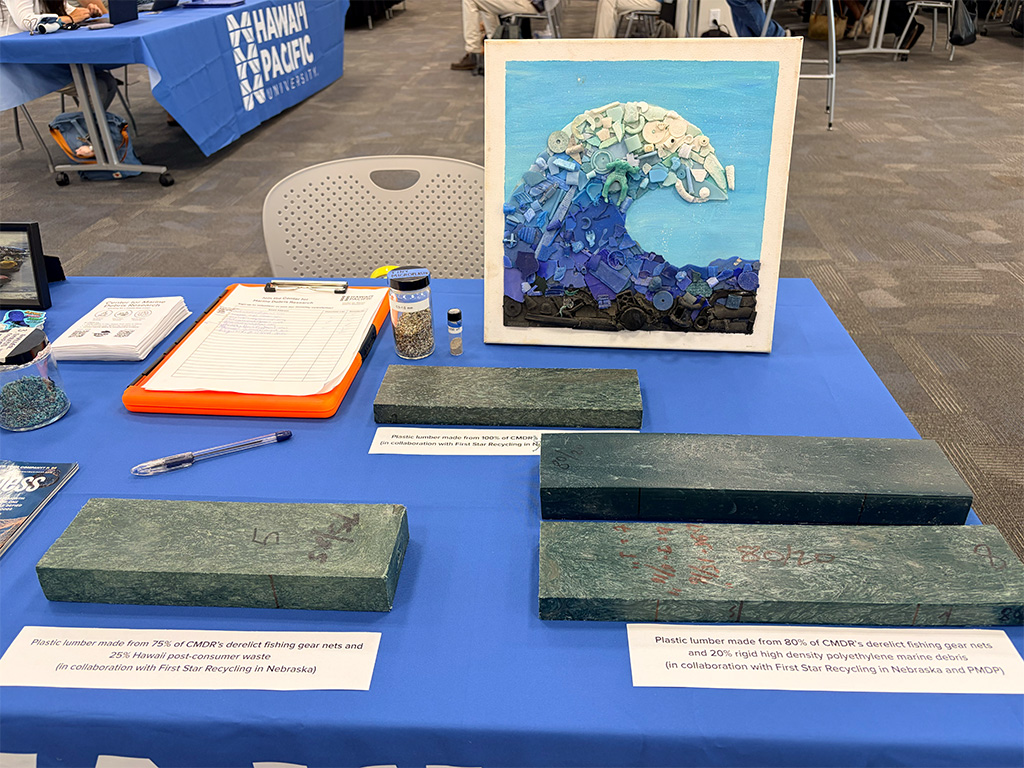
The Center for Marine Debris Research had several prototypes at the workshop for people to see.
-
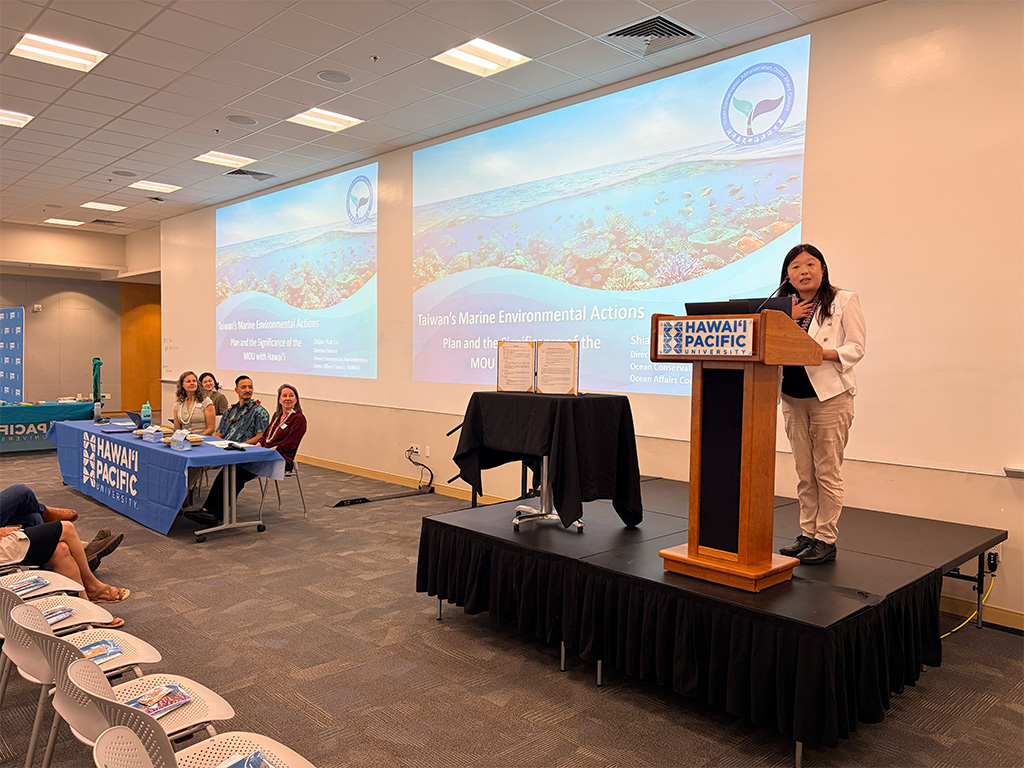
Director General Shiau-Yun Lu of Taiwan's Ocean Conservation Administration spoke about how both Taiwan and Hawai'i have a shared language that connects the islands.
In early August, HPU’s Center for Marine Debris Research (CMDR) co-hosted the International Derelict Fishing Gear Prevention Workshop, bringing together researchers and practitioners from across the Pacific. Experts included the International Pacific Research Center at the University of Hawaiʻi, the Hawaii Longline Association, the Papahānaumokuākea Marine National Monument's marine debris removal team, The Ocean Cleanup, and Taiwan's Ocean Conservation Administration (OCA), among other research and conservation organizations.
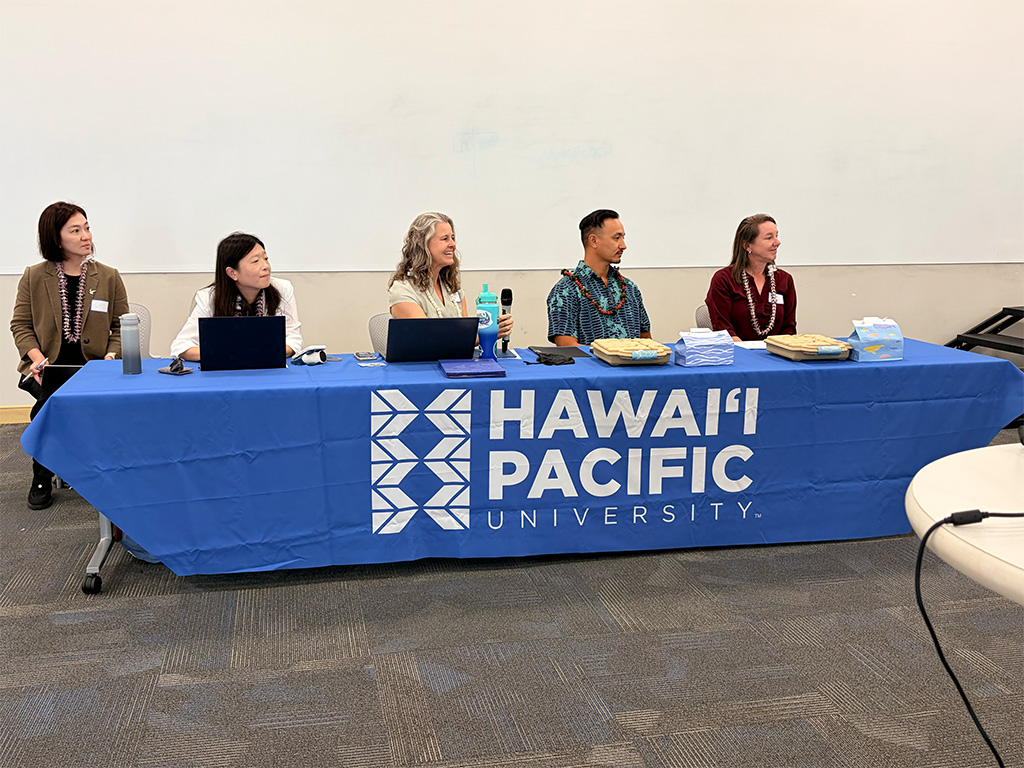
Panelists at the International Workshop on Derelict Fishing Gear included (left to right): Shiau-Yun Lu, Jennifer Lynch, Ryan Kanakaʻole, Brenda Jensen.
Participants exchanged perspectives on ocean-current transport, debris source identification, the economic and safety impacts of derelict fishing gear on fisheries, large-scale removal, and circular reuse, organizing their discussion around four priority areas: removal, sourcing, prevention, and recycling.
“We cannot only collect debris from our shores; we must stop it before it reaches the ocean,” said HPU CMDR Founder Jennifer Lynch, Ph.D.
The workshop builds on work CMDR has carried out since its founding in 2019. The partnership with OCA brings together Taiwan's experience in marine debris management and circular use with CMDR's strengths in marine debris science, source identification, and on-the-ground removal.
“Since its establishment, the Center for Marine Debris Research has been dedicated to developing and applying the best available science to better understand the challenge of marine plastic pollution,” said HPU Dean of the College of Natural and Computational Sciences Brenda Jensen, Ph.D.
The workshop also gave CMDR the occasion to formalize its relationship with Taiwan's OCA. The two organizations signed a memorandum of understanding laying out a shared framework for cooperation: exchanging information and expertise on marine debris response strategies, cleanup, prevention, and recycling and reuse; promoting institutional exchanges through personnel visits, meetings, and workshops; undertaking joint public communication and knowledge sharing; and encouraging the participation of stakeholders from government, academia, and other relevant sectors.
“This partnership between Taiwan and Hawaiʻi is an important step from end-of-pipe removal toward source prevention, and from management action toward sustainability,” Lynch said.
In recent years, the OCA has continued to remove marine debris and promote its recycling and circular use. In 2025, it removed 3,642 metric tons of marine debris and recovered more than 300 metric tons of debris materials, of which over 200 metric tons were recycled or repurposed. Through circular design and technological innovation, those materials have been transformed into everyday items such as marine-debris sunglasses, pens made from recovered floats, and towels made from discarded fishing nets.
The signing drew state and county leaders as well, including Ryan Kanakaʻole, chairperson of the Hawaiʻi Department of Land and Natural Resources, who spoke on behalf of Gov. Josh Green.
“The ocean recognizes no borders,” Kanakaʻole said. “Debris travels across regions on the currents, so our solutions must cross borders too.”
The partnership is intended to grow from collaboration between the two institutions into a more comprehensive ocean-governance network.
Director General Shiau-Yun Lu of Taiwan's OCA put it simply: “On a map, the Pacific may appear to place Taiwan and Hawaiʻi at opposite ends. But in truth, the ocean is the shared language that connects us.”
To sustain and expand this work, HPU CMDR is seeking philanthropic support to keep removal efforts moving, strengthen rapid-response recovery in sensitive reef areas, and advance solutions that prevent ghost gear from entering the ocean in the first place.
Individuals, businesses, and partners interested in supporting or partnering with HPU CMDR's marine debris research, recovery, and recycling innovations are encouraged to contact Jennifer Lynch, Ph.D., director of HPU CMDR, at jmlynch@hpu.edu.
For more information on HPU CMDR, visit www.hpu.edu/cmdr.