

-
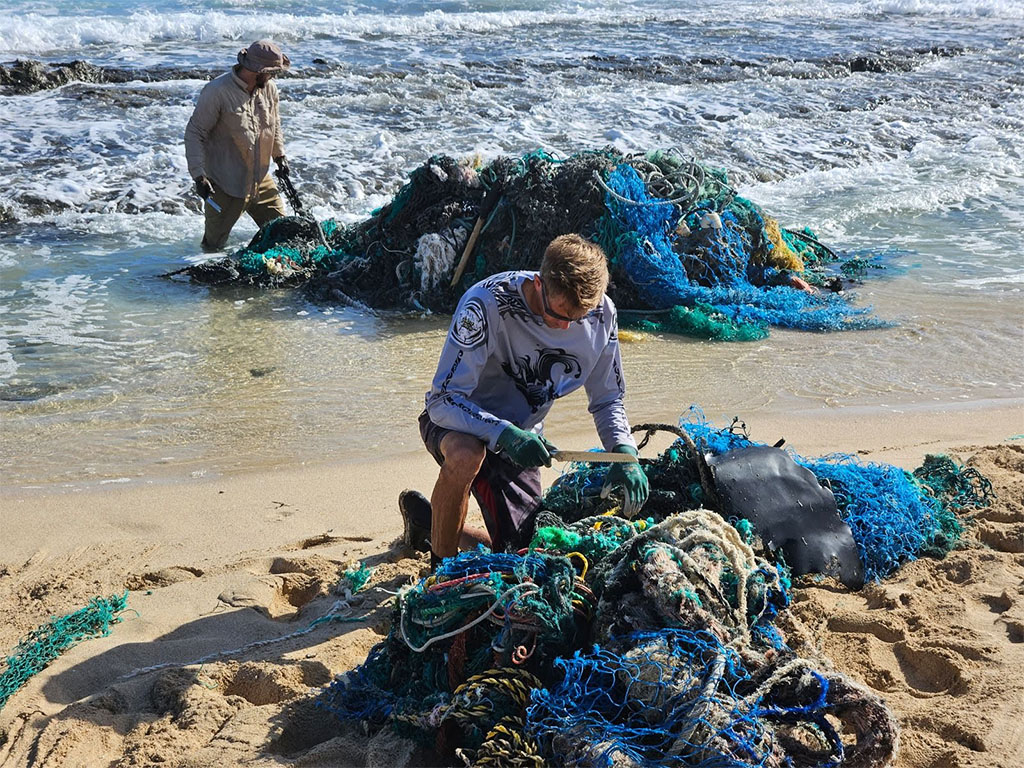
HPU's 'Bounty Project' has removed over 185,000 pounds of derelict fishing gear, often called ghost gear, from the North Pacific Ocean.
-
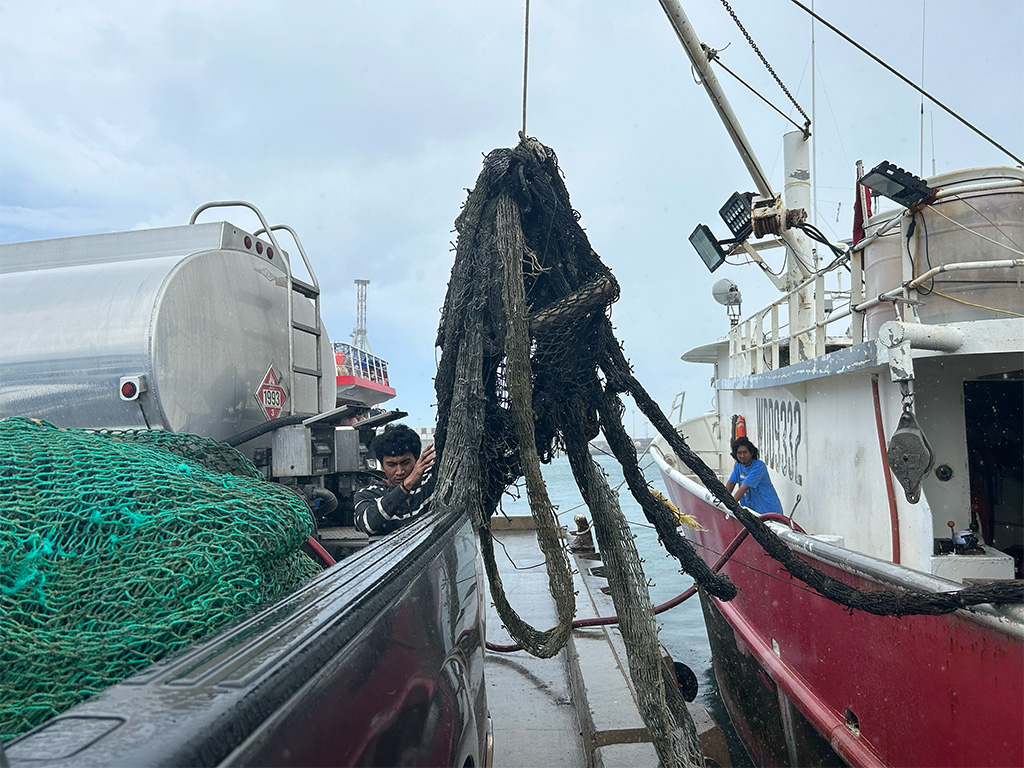
Fishermen hauling derelict fishing gear from the ocean to the shore.
-
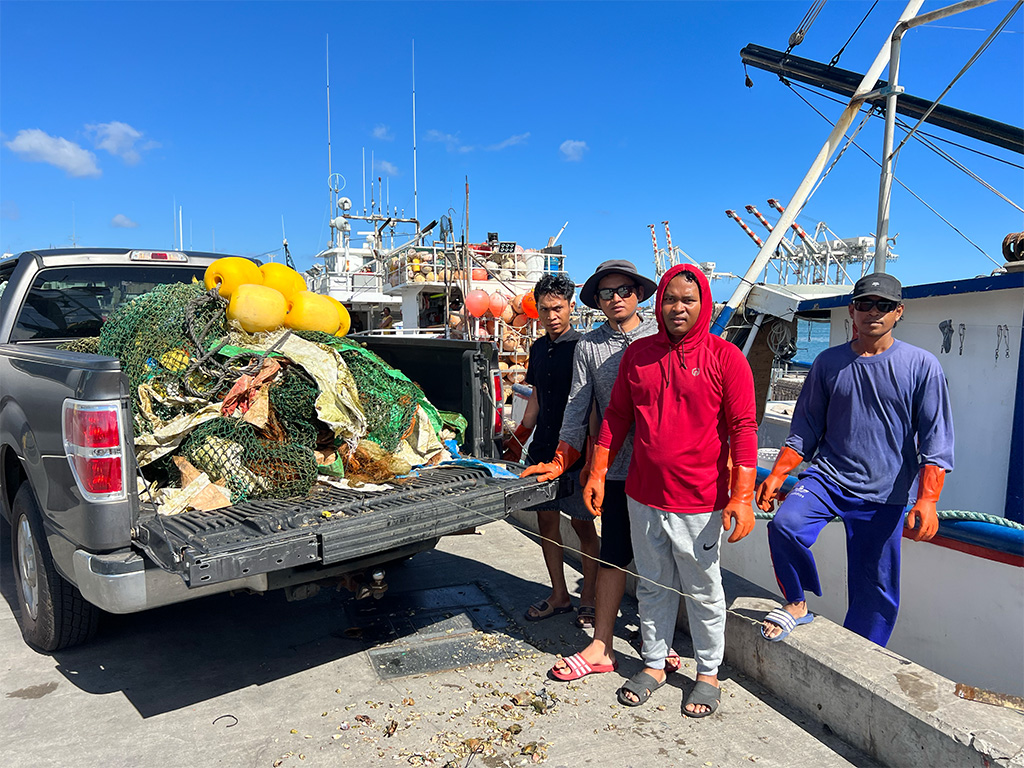
Fishermen have helped to recover derelict gear during routine fishing activity.
-
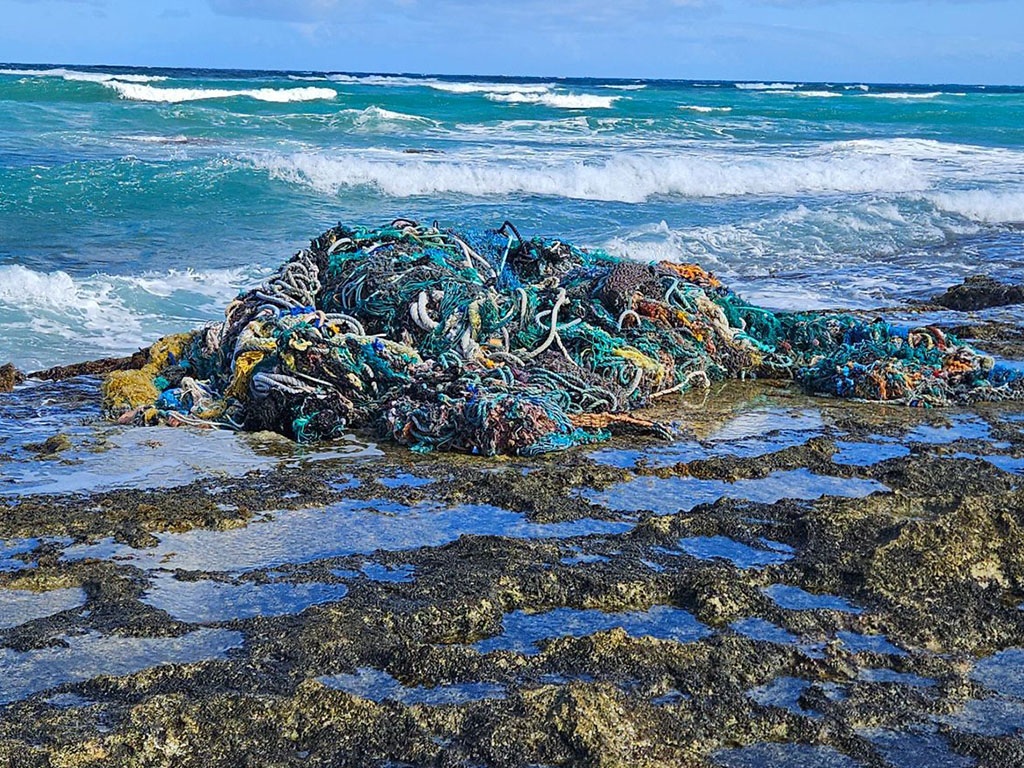
Derelict fishing gear washed ashore in Hawai'i.
-
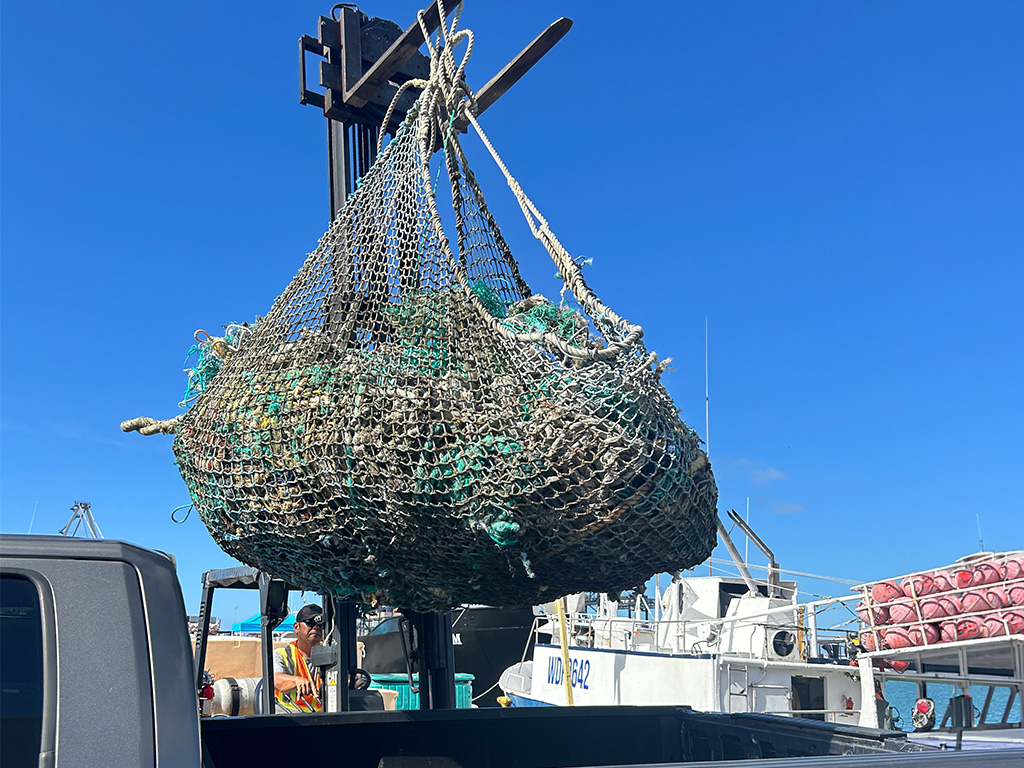
Derelict fishing gear recovered from the ocean and brought ashore by fishermen.
-
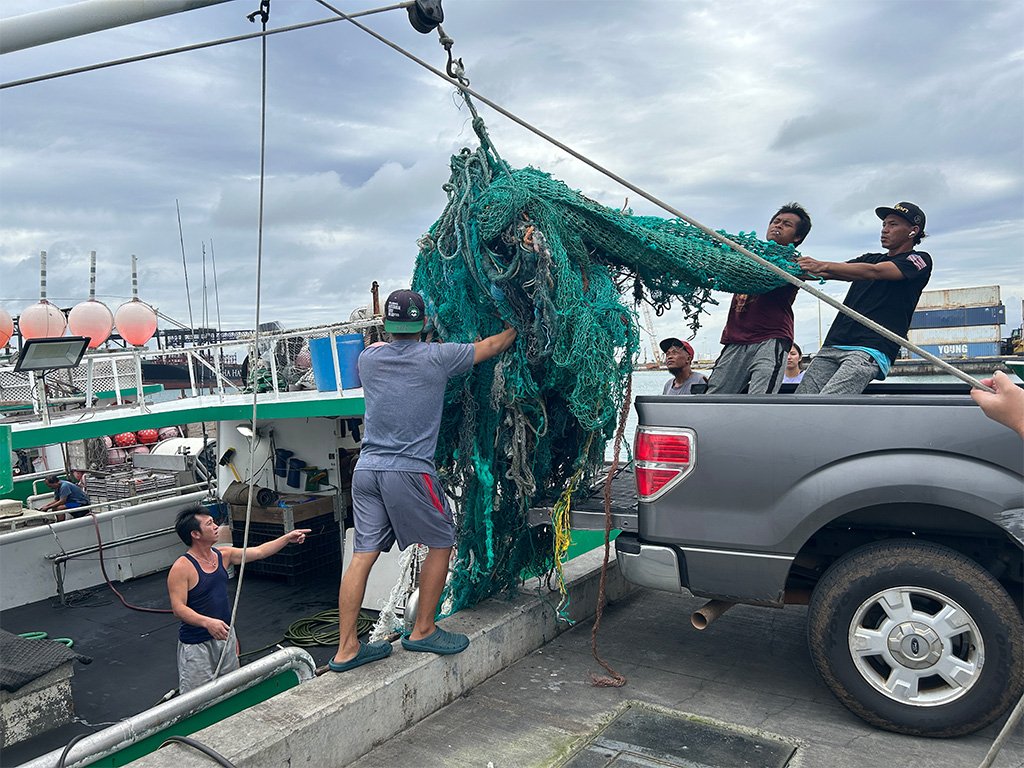
Fishermen have turned commercial fishing trips into vessels of opportunity for ocean cleanup.
In just over three years, HPU's Center for Marine Debris Research (HPU CMDR) “Bounty Project” has removed over 185,000 pounds (84 metric tons) of derelict fishing gear (DFG), often called ghost gear, from the North Pacific Ocean by turning commercial fishing trips into vessels of opportunity for ocean cleanup, pulling nets, lines, and floats out of the water before they can drift into reefs, shorelines, or threaten endangered marine wildlife. The Project is one of only three known efforts to remove debris in the distant North Pacific Garbage Patch.
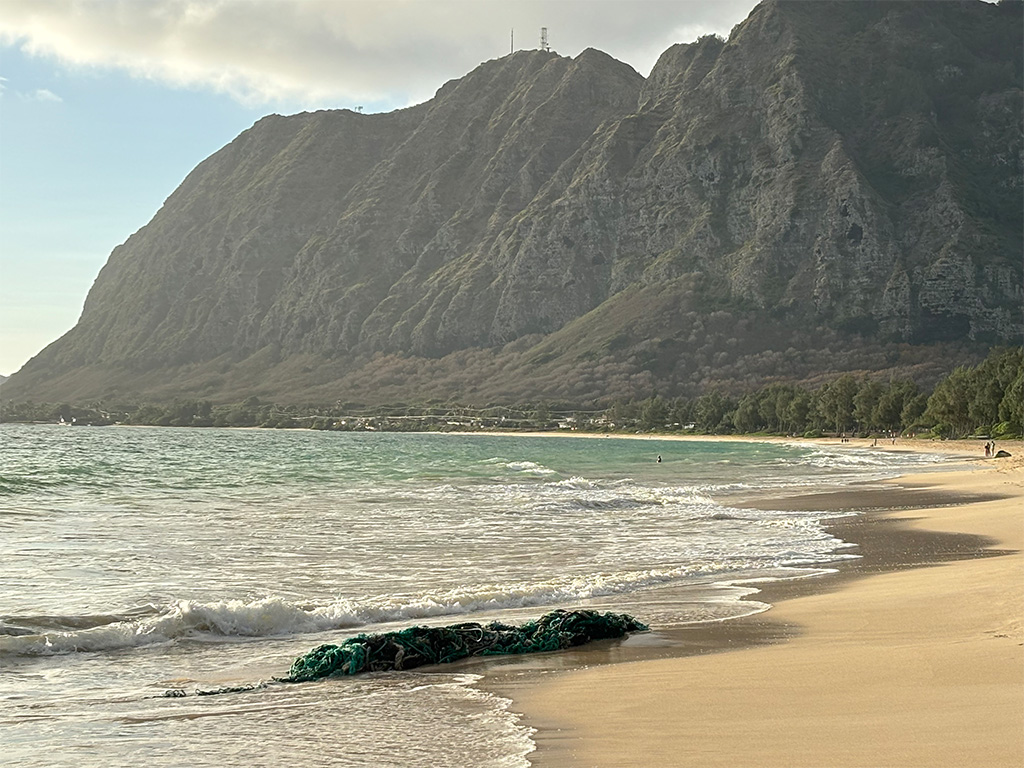
Derelict fishing gear, often called ghost gear, washed ashore on a beach in Hawai'i.
The Bounty Project, launched in November 2022, was built on a novel, straightforward idea: position the fishermen already working on the ocean at the center of the solution. Through partnerships with the Hawaiʻi Longline Association and the Hawaiʻi Department of Land and Natural Resources’ Division of Aquatic Resources, eligible commercial fishers are compensated to recover derelict gear during routine fishing activity, so removal occurs at sea, not after debris had already reached the shore. This approach greatly expands the ability to remove gear offshore and reduce greenhouse-gas emissions associated with removal operations, a valuable environmental benefit offered by the Project.
“It is incredible that we are now approaching 200,000 pounds of DFG removed from the ocean through this project,” says HPU CMDR Project Manager Katie Stevens, “and it has been great to see the enthusiasm and engagement of the commercial fishers as stewards of the ocean environment.”
Supported through a 2022 award from the National Oceanic and Atmospheric Administration (NOAA) Marine Debris Program, with Ocean Conservancy providing matching funds, the Bounty Project has helped scale up removals and strengthen the Project’s recovery system and partnerships.
"This project stands out for its innovative approach, partnering with commercial fishers toward a solution. Compensating those already on the water to remove derelict fishing gear, maximizes both efficiency and environmental benefit," shared Mark Manuel, NOAA Marine Debris Program’s Pacific Islands Region Coordinator.
HPU’s final report specifies measurable environmental, social, and economic benefits:
- More than 690 DFG recovery events were documented, with gear diverted from re-entry into the marine environment through reuse, recycling, energy recovery, or responsible disposal.
- The Project engaged 77 commercial fishers and supported over 2,100 volunteer hours.
- Participating non-longline fishers removed gear within one hour of detection 76% of the time and within 12 hours 88% of the time, helping prevent debris from repeatedly snagging and dragging across sensitive habitat.
- The Project included monthly surveillance of sensitive reef habitats, including Kāneʻohe Bay, supporting rapid-response recovery where derelict gear poses immediate risk.
“It is exciting to be a part of a project that directly engages fishermen in large scale marine debris removal on O‘ahu. The financial reward has created friendly competition and results in a very rapid response to get the nets off of reefs to give the corals a fighting chance of survival,” said Hank Lynch, a fisherman who participated in the project. “When the nets are too large, we call on the other bounty fishers for help and split the reward. The payment helps to diversify the income of commercial fishers and supports maintenance of our vessels so we have the capacity to continue this work.”
Recovered ghost gear was brought ashore for managed processing and diversion. Most material was handled through Hawaiʻi’s Nets-to-Energy pathway, where recovered nets were shredded and delivered to H-Power for incineration and electricity generation.
HPU CMDR is also testing higher-value, more sustainable, diversion options.
The final report details that 2,323 pounds of recovered gear were shredded and recycled into a Hawaiʻi Department of Transportation experimental “Nets-to-Roads” pavement project in ʻEwa Beach as part of ongoing recycling trials. Some recovered material has also been stored for additional recycling research.
In addition to removals, HPU CMDR has hosted booths at public events and cleanups, as well as tours and visits to share the project’s work with audiences ranging from local community members to international visitors and journalists.
To sustain and expand this work, HPU CMDR is seeking philanthropic support to keep removal efforts moving, strengthen rapid-response recovery in sensitive reef areas, and advance solutions that prevent ghost gear from entering the ocean in the first place.
Individuals, businesses, and partners interested in supporting or partnering with HPU CMDR’s marine debris research, recovery, and recycling innovations are encouraged to contact HPU Director of HPU CMDR Jennifer Lynch, Ph.D., at: jmlynch@hpu.edu.
For more information on HPU CMDR, visit: www.hpu.edu/cmdr.